Science under control: MES, DOAJ and Ukrainian professional journals
DOAJ is well known in scientific communities around the world because it indexes many open access scientific journals and is (or was) a guarantor of the quality and reliability of such journals. After our article about the directory, we began to receive dozens of complaints and new facts emerged about the directory, or more precisely, about the ethical boundaries of its Ukrainian division. Recently, questionable actions have been observed – the Ministry of Education and Science of Ukraine is trying to make indexing in DOAJ one of the requirements for the evaluation of scientific journals in Ukraine at the legislative level. Is this cooperation for the development of science, or is there a material interest behind it? Today we will look at why this is happening, who benefits from it, and who is involved.
DOAJ: from a symbol of openness to an instrument of influence
DOAJ recently underwent a reform and announced a new policy. We thank the team and everyone involved for the idea and concept that led to the creation of this directory. But today, it is difficult to talk about the same DOAJ that was once a symbol of openness and reliability. Our previous observations and analysis show that the word “Open” in the title Directory of Open Access Journals is gradually losing its meaning.
In a previous article, we discussed in detail what is happening within DOAJ: predatory practices, sponsorship influences, Russian propaganda, etc. But now the issue goes beyond the directory itself. We see how officials in Ukraine are starting to use this resource – and they are not always doing so transparently.
Although Ukrainian legislation does not currently require journals to be indexed in DOAJ, and this does not affect their inclusion in the List of scientific professional journals of Ukraine, the trends are cause for concern. This is because indexing may soon become an additional criterion for evaluating scientific professional journals. And here is the main question: who benefits from promoting this right now, and why?
Cooperation between young Ukrainian scientists and DOAJ
There are several people in Ukraine involved in DOAJ who receive hourly pay from the directory. Among them is Yuliia Hartman, who serves as editor on a voluntary basis and receives hourly pay. This truly deserves special recognition. It is important to note that everything discussed further in this article has nothing to do with Yuliia Hartman's activities. Her name is mentioned in this article solely to understand the logic and sequence of actions related to the plans of representatives of the Ministry of Education and Science of Ukraine (MES).
Everything that follows looks like a well-thought-out scenario. By whom? Decide for yourself...
An official letter from DOAJ was sent to the MES. Among the signatories of the document was Yuliia Hartman, a first-year postgraduate student. She is also the editor-in-chief of the scientific journal Access to Justice in Eastern Europe Journal.
DOAJ excluded ten scientific journals at once without providing any reasons or explanations. After contacting the organisation, it was found that the reason for the exclusion was not the lack of peer review – all publications undergo peer review and have established publication processes. The journals are published in English, use leading software to verify the uniqueness of articles, adhere to open access standards and policies, and do not charge publication fees. The key reason for the exclusion was the cooperation of university publishers with commercial structures that provide services for assigning DOIs, creating websites, consulting, etc.
It was Yuliia Hartman's signature on this letter that became the subject of discussion.
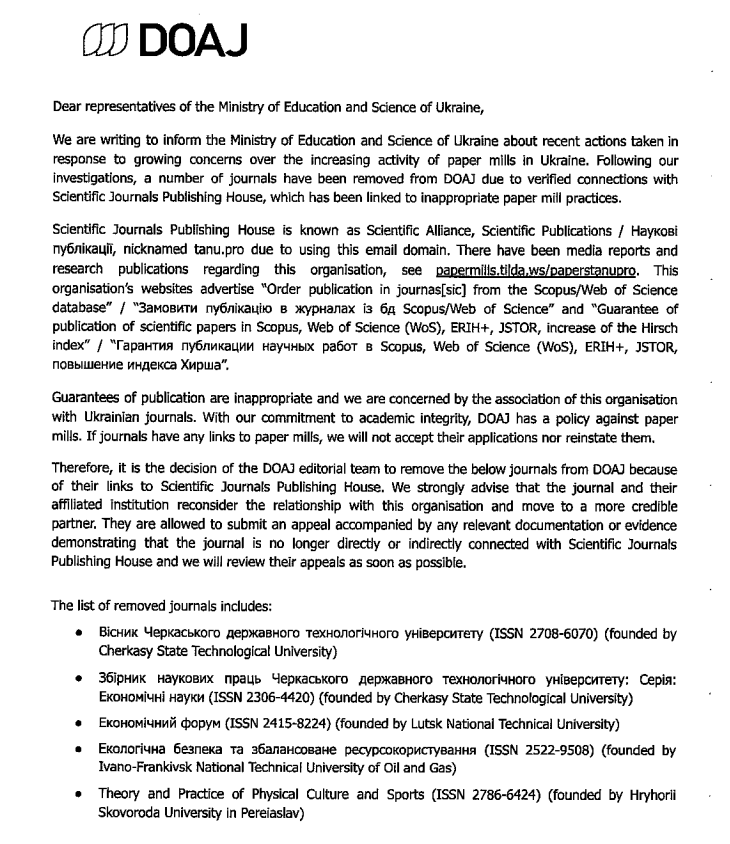
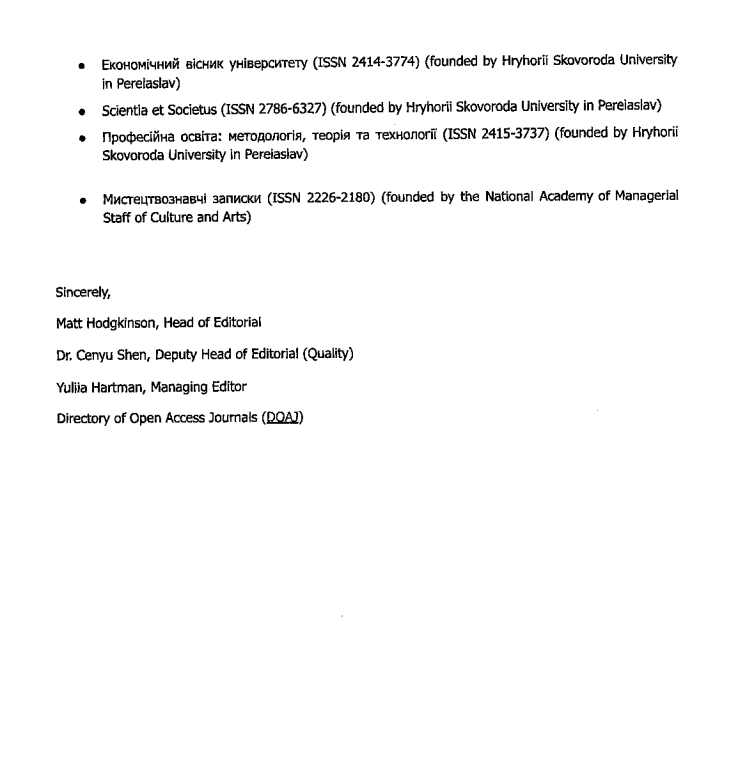
Journals sent requests and letters to DOAJ asking for clarification on specific comments about their work. In response, they received a reply along the lines of: “Everything is fine, but you are collaborating with company X, which created your website. Terminate your contract with this company and then apply for reinclusion”.
At first glance, this might seem like a formal recommendation, but there is one critically important “but” – there is a direct conflict of interest. This raises a key question: can a person who holds a position in a professional scientific journal in Ukraine simultaneously work at DOAJ and evaluate other Ukrainian scientific journals without providing any specific facts about violations on the part of these journals (we remind you that no facts were provided either in the letter or in response to requests from the journals)? This situation directly indicates a conflict of interest.
DOAJ – a tool of influence for the Ministry of Education and Science of Ukraine
At this time, the MES supports this letter. Deputy Minister Denys Kurbatov responds to it in a rather telling way – he uses it as a basis for his own actions. On the same day, Mr Kurbatov takes this letter as an example and begins to “work” with scientific journals and universities that are critical of his reform of the List of scientific professional journals of Ukraine.
He then prepares his own letter and personally sends it to universities. According to our confirmed information, copies of this letter also ended up in chats with vice-rectors and the management of higher education institutions. It is clear that the fact that journals are cooperating with someone other than the structures approved by the top brass is categorically displeasing to the Deputy Minister of Education and Science of Ukraine, Denys Kurbatov. This is an important detail, which we will return to later.
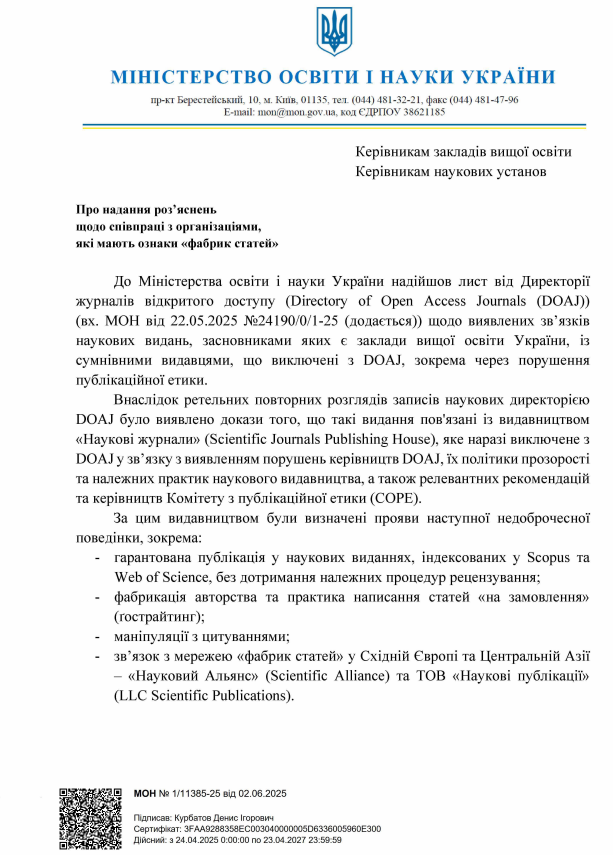
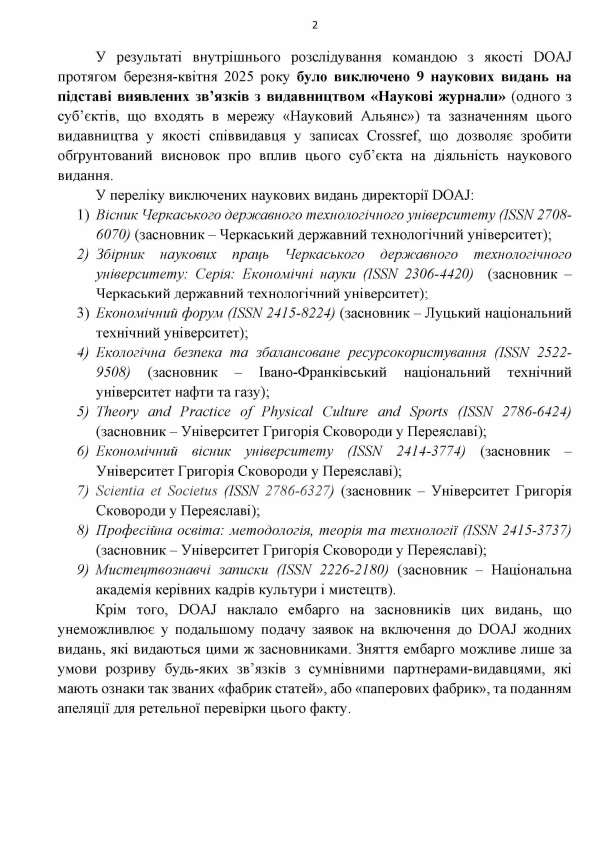
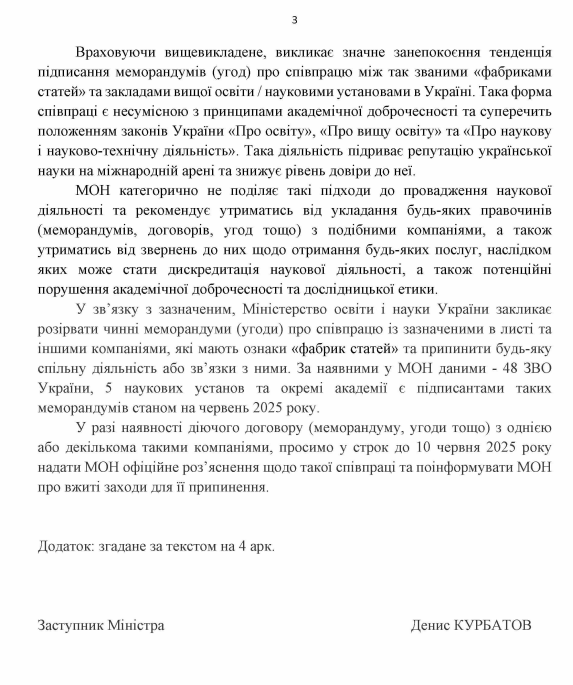
Let's ignore the fact that the Deputy Minister of Education and Science is sending letters in chat rooms aimed at distributing business opportunities among commercial structures. Should an official of this level be involved in resolving issues related to the economic activities of publishing houses or business structures? The answer is obvious. The actions described are more reminiscent of personal interest and create the impression that “if things don't go my way, there will be consequences”.
The situation seems obvious. It is particularly telling that the Deputy Minister took office without passing the mandatory state language exam, as required by law.
In 2023, prior to his appointment, Denys Kurbatov effectively violated the law, which requires passing such an exam. This raises reasonable doubts about the legality of his tenure.
According to Article 7 of the Law of Ukraine “On the Cabinet of Ministers of Ukraine”:
Members of the Cabinet of Ministers of Ukraine may be citizens of Ukraine who have the right to vote, higher education and proficiency in the state language in accordance with the level determined by the National Commission for State Language Standards.
This is a clear violation of the norms of current legislation and the established order of submissions.
Thus, according to Part 6 of Article 10 of the Law of Ukraine “On the Legal Regime of Martial Law”, during martial law:
A person who applies for a political position, a position in the civil service, a position in local government, a position as head of a state-owned enterprise, a position as head of a municipal enterprise, institution or organisation, shall not submit a document confirming their level of proficiency in the state language in accordance with the Law of Ukraine “On Ensuring the Functioning of the Ukrainian Language as the State Language” during the period of martial law.
For comparison, it is worth mentioning another example. In 2023, Rustem Umerov, after being appointed Minister of Defence of Ukraine, found the time and opportunity to take the mandatory state language exam. Although the law allowed him to avoid this, he still fulfilled the necessary requirement on time. Is it possible that during their entire tenure, the leadership of the Ministry of Education and Science, which is directly responsible for educational policy and where language is extremely important, has been unable to meet such a basic requirement? The question is rhetorical, but it clearly highlights the seriousness of the problem.
All exam certificates can be verified on the website of the National Commission for State Language Standards.
If violations of the law are forgiven, then Denys Kurbatov will probably also be forgiven for attempting to personally determine which scientific journals are considered professional and which are not, using a “manual” DOAJ for this purpose. Why “manual”? Read on.
Seminars and webinars from the Ministry of Education and Science of Ukraine
Following the events described above, the Ministry of Education and Science of Ukraine launched a series of webinars, to which all of the above-mentioned participants are invited. One of these webinars is available here. During the events, speakers attempt to justify the inclusion of the DOAJ database in Ukrainian regulations following the reform of the list of scientific professional journals. At the same time, a key aspect is being ignored: journals were excluded without providing specific facts and reasonable grounds.
In particular, the following people took part in the event:
- Yuliia Hartman – representative of the DOAJ management
- Iryna Izara – chair of the Ukrainian regional branch of EASE (European Association of Science Editors), who is also Yuliia Hartman's supervisor at the journal Access to Justice in Eastern Europe
- Denys Kurbatov – Deputy Minister of Education and Science of Ukraine
- Hanna Tolstanova – Vice-Rector for Research and Chair of the Council of Young Scientists at Taras Shevchenko National University of Kyiv, where Yuliia Hartman studies and plans to defend her dissertation
- Pavlo Usenko – founder and head of the Open Science in Ukraine project
Analysing the composition of the participants, it can be concluded that most of the webinar speakers are Yuliia Hartman's direct or indirect supervisors. This indicates the existence of close hierarchical ties and that the Ukrainian representation of DOAJ is in fact under the influence of a narrow circle of individuals.
There is a clear vertical dependence in the activities of DOAJ in Ukraine: at the lower level – Yuliia Hartman, then her superiors Anna Tolstanova and Irina Izarova, and at the top – Deputy Minister of Education and Science of Ukraine Denys Kurbatov. Thus, a situation arises in which Mr Kurbatov could potentially influence the decisions and activities of DOAJ in Ukraine.
Lobbying for Open Science in Ukraine at the Ministry of Education and Science
I would like to focus more attention on the Open Science in Ukraine project, whose services were publicly advertised during the webinar. In addition, the Ministry of Education and Science of Ukraine actively approves their use.
This demonstrates clear lobbying by one specific business structure. Other market representatives were not even invited to participate in the discussion or express their position. This indicates a lack of objectivity and equal conditions.
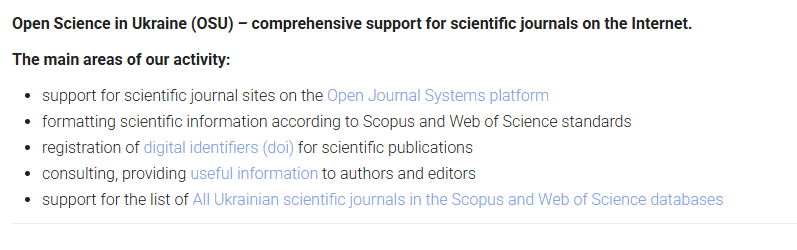
This raises a logical question: why was a representative of this commercial structure invited to the webinar by the Ministry of Education and Science and given the opportunity to openly advertise their services?
As mentioned earlier, dozens of journals were excluded from DOAJ solely because they collaborated with commercial structures that provide services for assigning DOIs, creating websites, consulting, etc. These companies were obviously not liked by the Deputy Minister of Education and Science, Denys Kurbatov.
What conclusions can be drawn from this?
Analysis of the data presented in the article allows us to draw certain conclusions, although they look rather alarming. After the adoption of the new draft law, any scientific journal that the Ministry of Education and Science does not like can be excluded from DOAJ with just one phone call from a representative of the ministry. This situation and the corresponding practice have already been informally dubbed the “Denys Kurbatov DOAJ-MES Anti-Reform”.
In fact, Deputy Minister of Education and Science Denys Kurbatov using the “manual” DOAJ database and the provisions of the new law, gains almost unlimited powers. This not only violates the principles of democracy and a free economy, but also creates a situation where one person can effectively determine with whom universities can cooperate and with whom they cannot. He also gains the right to decide which scientific journals are “good” and which are “bad”, regardless of international standards and objective evaluation criteria.
Individuals who are dependent on the influence of the Deputy Minister and involved in the dissertation defence process are forced to follow his instructions and prepare justifications for such decisions. This creates potential risks of abuse, corrupt practices and undermining trust in the scientific evaluation system in Ukraine as a whole.
The future of scientific journals in Ukraine
At first, we thought that the facts presented in the article would only arouse natural interest and questions in the Ukrainian scientific community. However, it seems that DOAJ is trying to position itself as a third full-fledged database alongside the internationally recognised Scopus and Web of Science. At the same time, there are attempts to enshrine this database in the legislative and regulatory acts of individual countries, initiating a process of “DOAJisation” of science.
However, the situation turned out to be more complicated: groups of individuals interested in including DOAJ in the national regulatory framework have formed in Ukraine. This is because they have direct hierarchical influence over DOAJ representatives in Ukraine, which allows them to manually add or remove journals and use the authority of the directory for their own interests. As the examples above show, this has already happened. Such actions go beyond professional ethics and start to influence government policy in science and education. Our team hopes this is an exaggeration, but we'll have a clearer picture by the end of 2025.
The Ukrainian scientific community is concerned about the possible adoption of the new draft law, as it could spell disaster for periodicals in Ukraine. Higher education institutions and scientific journals that do not support or do not comply with the position of the Ministry of Education and Science risk coming under the direct control of the deputy minister. We are grateful to the Ministry of Justice for once again drawing attention to the numerous gaps and shortcomings of this draft. We hope that logic and common sense will prevail.
DOAJ is a valuable resource worldwide: its ideas, concept and goals are sound. However, it has now become embroiled in ambiguous situations and political games. We believe that senior management is unaware of the intentions of the Deputy Minister of Education and Science. If the draft law is adopted, it will become clear that our fears were justified, and the scientific community will need to respond urgently. We cannot allow science and scientific journals in Ukraine to be destroyed!
 Join
Join